









IELTS Speaking Part 3 requires candidates to engage in abstract discussions about societal and global issues. Unlike earlier sections, this part evaluates the ability to articulate complex opinions through reasoning, comparison, and speculation. Success depends on providing structured, coherent responses that demonstrate critical thinking and a wide range of vocabulary.
Effective preparation involves practicing common themes like education, technology, and the environment. Candidates can build confidence by conducting mock interviews, using the PEEL technique for structured answers, and engaging in peer discussions. Mastering these strategies helps test-takers meet assessment criteria for fluency, grammatical range, and lexical resource.
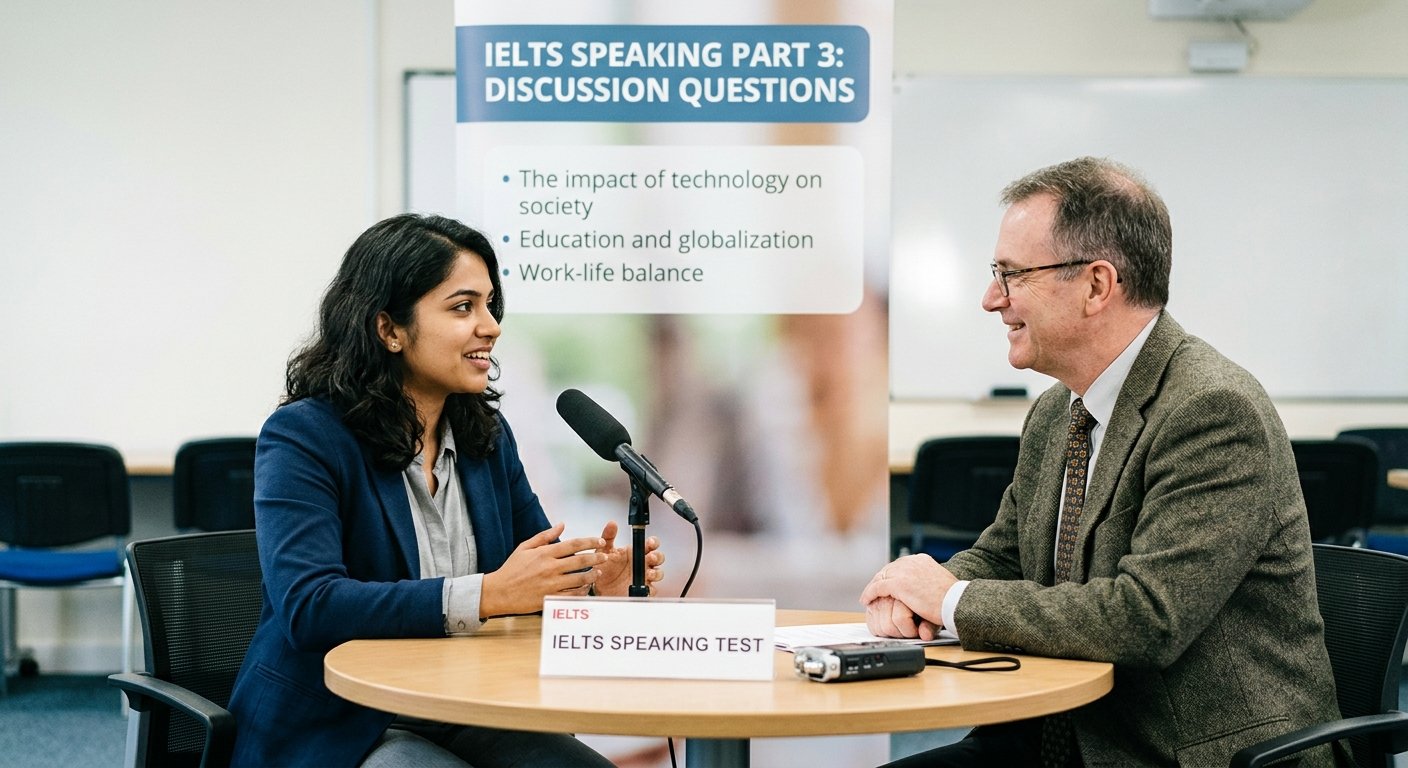
Understanding IELTS Speaking Part 3
IELTS Speaking Part 3 is a critical segment of the IELTS examination, designed to gauge candidates’ abilities to articulate thoughts and opinions on more abstract topics. This part usually follows Parts 1 and 2 and serves a distinct purpose, transitioning from personal experiences in Part 1 to elaborative discussions in Part 3. While Part 1 focuses on familiar topics and personal interests, and Part 2 requires candidates to speak about a specific subject for one to two minutes, Part 3 demands deeper, more complex responses.
The format of Speaking Part 3 comprises an interview-style discussion where the examiner poses questions that encourage candidates to elaborate on their views, providing insights into societal issues, cultural perspectives, and global challenges. This requires not just a surface-level understanding but an ability to engage with ideas critically and thoughtfully. Since the examiner is interested in assessing how effectively candidates can communicate their perspectives, responses should be clear, coherent, and well-structured.
Participants in this section must demonstrate their ability to reason, compare, and discuss ideas intelligently, as responses should extend beyond mere agreement or disagreement. This is significantly different from the other parts of the speaking test, as the complexity of concepts requires candidates to organize their thoughts and articulate them persuasively. Furthermore, the enhanced questioning technique aims to evaluate candidates’ fluency, lexical resource, and grammatical range effectively. It is essential for candidates to practice articulating their opinions and engage in discussions to be appropriately prepared for this section. Mastering Part 3 can not only lead to a higher score but also equips candidates with valuable skills applicable in academic and professional contexts.
Types of Discussion Questions
In IELTS Speaking Part 3, candidates encounter a variety of discussion questions that are designed to assess their ability to articulate thoughts and opinions clearly. This section will categorize these questions into four main types: opinion, speculation, comparison, and personal experience.
First, opinion questions require candidates to express their views on a given topic. For example, a question might ask, “Do you think technology has improved our lives?” Such questions evaluate the candidate’s ability to form and support an argument. Candidates should aim to elaborate on their viewpoints with relevant examples and logical reasoning.
Next, speculation questions often prompt the candidate to consider possibilities or outcomes. An example would be, “What might be the impact of climate change in the next decade?” Here, candidates need to showcase their ability to think critically about future scenarios. It is important to encourage a thoughtful response that includes both positive and negative aspects.
Comparison questions, on the other hand, require candidates to contrast two different ideas or phenomena. For instance, a question like, “How does life in a big city differ from life in a small town?” necessitates clear distinctions and justifications. Providing examples from personal knowledge or widely accepted trends can enrich the response.
Lastly, personal experience questions invite candidates to relate their own past experiences to the subject matter. An illustration might be, “Can you describe a time when you faced a difficult decision?” This type of question allows for personal storytelling, aiding in the creation of a connection with the examiner.
Understanding these types of discussion questions is crucial for effective preparation and performance in IELTS Speaking Part 3. Candidates should practice formulating responses across different categories to enhance their overall speaking proficiency.
Strategies for Answering Discussion Questions
In the IELTS Speaking Part 3, candidates are typically presented with a series of discussion questions that require thoughtful and elaborate responses. To excel in this segment, it is imperative to employ effective strategies that enhance the clarity and depth of answers.
One primary strategy is to structure your response in a coherent manner. A clear structure typically involves introducing your main point, providing supporting details, and concluding your thoughts. Starting with a direct answer to the question sets a positive tone and allows examiners to see your attitude towards the topic. Following this, elaborating with relevant examples and personal experiences not only reinforces your viewpoint but also demonstrates your ability to utilize diverse vocabulary, an essential criterion in the IELTS speaking evaluation.
Utilizing a range of appropriate vocabulary is equally crucial. It is advisable to familiarize yourself with synonyms and related terms to avoid repetition and enhance the richness of your language. For instance, instead of repeatedly using the word ‘important,’ you might consider alternative phrases such as ‘significant’ or ‘crucial.’ This practice reflects a broader command of the English language and helps in achieving a higher band score.
Additionally, answering discussion questions with sufficient depth is vital. This can be accomplished by exploring various aspects of the topic, considering different viewpoints, and offering critical insights. Engaging with hypothetical scenarios or linking back to current events can also contribute depth to your responses, making them more interesting and relevant.
Lastly, practicing these strategies consistently in mock tests will build confidence and enable a more natural delivery during the actual exam. Adapting to this structured approach will not only assist in addressing the questions effectively but also convey a high level of fluency, which is essential for success in the IELTS Speaking Part 3.
🎯 Take Your IELTS Speaking Mock Test Today
Practice with realistic IELTS Speaking questions, receive instant AI-powered feedback, and improve your IELTS band score faster.
🎯 Start IELTS Speaking Mock Test 🚀 Subscribe Now 📚 Visit Flying ColorsCommon Topics for Discussion Questions
In IELTS Speaking Part 3, candidates are often confronted with a variety of discussion questions that are intended to evaluate their ability to express opinions, analyze complex ideas, and engage in a reasoned conversation. Understanding common themes in this section can greatly enhance test preparation and performance.
The first prominent topic in this section is education. Questions may explore the role of education in society, methods of teaching, or the importance of lifelong learning. For instance, candidates might encounter inquiries such as, “What changes do you think will take place in education in the future?” or “How important is it to have a college degree?” These questions require respondents to think critically about the education system and articulate their viewpoints.
Another frequently discussed theme is the environment. This category can encompass various subjects, including climate change, pollution, and sustainable living. Prospective test-takers should prepare to answer questions like, “What measures can individuals take to protect the environment?” or “How significant is the impact of human activity on nature?” Such discussions not only evaluate a candidate’s knowledge of contemporary issues but also their ability to propose solutions.
Technology is also a critical theme, reflecting its pervasive influence on modern life. Discussion questions may focus on the benefits and drawbacks of technological advancements. Candidates could face queries such as, “How has technology affected our communication habits?” or “Do you believe that society relies too much on technology?” These questions prompt thoughtful discussion on the implications of technology in our daily lives.
Lastly, culture serves as an essential topic, where candidates may be asked about cultural differences, the impact of globalization, or preserving tradition. Sample questions include, “What role does culture play in shaping identity?” or “How can different cultures learn from each other?” These topics encourage the discussion of values, beliefs, and practices reflective of various societies.
Overall, familiarizing oneself with these common topics and potential questions can equip IELTS candidates with the necessary tools to excel during the speaking test.
Building Confidence for Speaking Tests
Confidence is a crucial factor when it comes to performing well in IELTS Speaking Part 3. As this section requires deeper engagement with discussion questions, students often find themselves overwhelmed by anxiety or uncertainty. However, there are several effective techniques that can help candidates bolster their confidence when approaching these speaking tests.
One effective strategy is to develop a regular practice routine. Consistent practice not only familiarizes candidates with the types of questions they might encounter but also improves their fluency during the examination. Candidates can engage in self-practice by recording themselves while answering sample discussion questions. This allows for self-evaluation, which helps in identifying areas for improvement. Additionally, engaging in conversation with peers or language partners can simulate a more immersive speaking environment, further enhancing one’s confidence.
Mock interviews are another essential component of preparation. By participating in mock tests, candidates can experience the speaking test conditions firsthand. This reduces any feelings of apprehension as they become accustomed to the structure and timing of the exam. Feedback from a teacher or a proficient speaker can provide invaluable insights into one’s performance, pinpointing specific strengths and weaknesses. Such personalized guidance can significantly elevate a student’s confidence.
Furthermore, relaxation techniques are instrumental in managing anxiety before and during the speaking test. Deep breathing exercises and visualization techniques can prove effective in calming nerves. Candidates may visualize a successful speaking test experience, which can set a positive tone and frame of mind heading into the exam. Furthermore, ensuring a good night’s sleep before the test can bolster mental clarity, enabling candidates to articulate their thoughts more effectively.
In conclusion, building confidence for IELTS Speaking Part 3 involves a combination of consistent practice, mock interviews, and relaxation techniques. By implementing these strategies, candidates can greatly improve their performance and approach their speaking tests with a greater sense of assurance.
Importance of Critical Thinking in Responses
The skill of critical thinking plays a pivotal role in effectively responding to the discussion questions in IELTS Speaking Part 3. This section not only evaluates a candidate’s fluency and coherence but also their capability to engage in higher-level reasoning and analysis. Therefore, incorporating critical thinking into your responses is essential in showcasing a fuller understanding of the topic at hand.
When faced with a question, it is crucial to move beyond surface-level answers and delve into deeper implications. Critical thinkers assess the various facets of a topic, allowing them to provide a more nuanced answer. For example, rather than simply agreeing or disagreeing with a statement, a candidate should consider reasons, consequences, and alternative viewpoints. This shows the examiner that you have the ability to participate in an insightful discussion, which the IELTS test aims to assess.
To construct thoughtful and analytical responses, candidates can utilize a method known as the “PEEL” technique: Point, Evidence, Explanation, and Link. Start by stating your main point clearly; then provide evidence to support your argument. This could include personal experiences or factual information. Following that, elaborate on your point with explanations, discussing how it relates to the larger context of the question. Finally, link your response back to the question, reinforcing the relevance of your answer. Practicing this structure can enhance the depth of your responses, highlighting your critical thinking skills.
Moreover, engaging in discussions on various topics outside of exam contexts can also improve critical thinking abilities. By regularly questioning assumptions, evaluating multiple perspectives, and exploring complex issues, candidates can greatly enhance their argumentative skills—vital for succeeding in IELTS Speaking Part 3.
Practicing Discussion Questions
Effectively preparing for the IELTS Speaking Part 3, which involves discussion questions, can significantly enhance a candidate’s performance. Engaging in focused practice is essential for building confidence and fluency. To start, candidates can identify and utilize a variety of resources designed specifically for IELTS preparation. Various websites, mobile applications, and books provide practice questions that mirror the structure and content of the actual exam. Candidates should prioritize resources that offer clear explanations and sample responses to better understand scoring criteria.
Another effective strategy for mastering discussion questions is peer engagement. Forming study groups with fellow IELTS candidates allows for collaborative practice, where individuals can take turns answering questions, providing feedback, and discussing different viewpoints. This interaction promotes a deeper understanding of subject matter, encourages critical thinking, and helps candidates articulate their thoughts more effectively. It can also simulate exam conditions, making participants feel more comfortable during the test.
Utilizing past IELTS papers is another valuable method for preparation. Candidates can review previous exam questions related to discussion topics and practice articulating responses within a timed framework. This method not only provides insight into possible themes and topics but also helps candidates develop their ability to think and respond quickly under pressure. Analysing feedback on practice responses can guide candidates in refining their speaking skills, ensuring they can express ideas clearly and cohesively.
In summary, a combination of using diverse resources, engaging with peers, and practicing with past papers constitutes an effective approach to practicing discussion questions for the IELTS Speaking Part 3. These strategies promote not only familiarity with the format but also confidence in delivering well-structured responses.
Sample Discussion Questions and Model Answers
In IELTS Speaking Part 3, candidates encounter discussion questions that demand a deeper exploration of topics presented in Part 2. Here are some sample questions along with model answers to help illustrate effective strategies for responding to these questions.
Sample Question 1: “How do you think technology has changed the way we communicate?”
Model Answer: Technology has significantly transformed communication dynamics in several ways. Firstly, it has facilitated instant communication across vast distances, allowing individuals to connect via platforms such as WhatsApp, Zoom, and social media. This immediacy enables people to maintain relationships despite geographical barriers. Secondly, technology has changed the content of communication. Most dialogues today occur through text or visual media, leading to a rise in emojis and shorthand expressions. Finally, technology has also fostered a more inclusive communication environment by providing various tools like translation apps, enabling interaction among speakers of different languages.
Sample Question 2: “What role does education play in shaping a person’s character?”
Model Answer: Education plays a pivotal role in character development. It instills essential values such as discipline, perseverance, and critical thinking. When students engage in collaborative learning environments, they learn to cooperate and respect diverse perspectives. Moreover, educational institutions often emphasize ethics and social responsibility, which helps shape individuals into conscientious citizens. Furthermore, exposure to various cultures and ideas within an educational setting fosters empathy and open-mindedness, contributing significantly to a person’s overall character.
Sample Question 3: “Why is it important for people to take part in community service?”
Model Answer: Participation in community service is crucial for both individuals and society. For individuals, it cultivates a sense of belonging and social responsibility. Engaging with diverse groups allows people to appreciate different backgrounds and perspectives, fostering personal growth. For society, community service addresses various social issues, directly benefiting those in need. By coming together to assist one another, communities become stronger and more resilient. Additionally, involvement in community projects fosters collaboration among members, enhancing the sense of unity and collective purpose.
These sample questions and corresponding model answers exemplify how candidates can effectively articulate their thoughts during the IELTS Speaking Part 3 section. Utilizing organized and detailed responses will greatly assist candidates in achieving their desired scores.
Conclusion: Preparing for IELTS Speaking Part 3
Preparing for IELTS Speaking Part 3 is essential for candidates aiming to achieve a high score. This section of the speaking test focuses on the candidate’s ability to engage in a discussion and articulate opinions clearly. As outlined earlier, familiarity with the structure and types of questions is key to navigating this component of the examination successfully.
One of the most effective strategies for preparation involves extensive practice. Engaging in mock interviews can significantly enhance one’s confidence and fluency. Candidates are encouraged to actively participate in speaking clubs or online forums where they can practice discussing various topics, thus familiarizing themselves with the nuances of English conversation.
Moreover, understanding the assessment criteria laid out by IELTS is vital. It allows candidates to focus on specific areas, such as coherence, lexical resource, and grammatical accuracy, which are pivotal in determining their overall performance. Incorporating a range of vocabulary and varied sentence structures during practice will help in achieving a more compelling and persuasive argument during the actual test.
In summary, dedicating time to structured preparation and gaining experience through practical exercises can lead to substantial improvement. These efforts not only bolster speaking abilities but also build the confidence needed to perform well under exam conditions, ultimately paving the way for success in the IELTS Speaking Part 3. By embracing a consistent and thorough preparation approach, candidates can aspire to excel in this critical segment of the IELTS examination.